
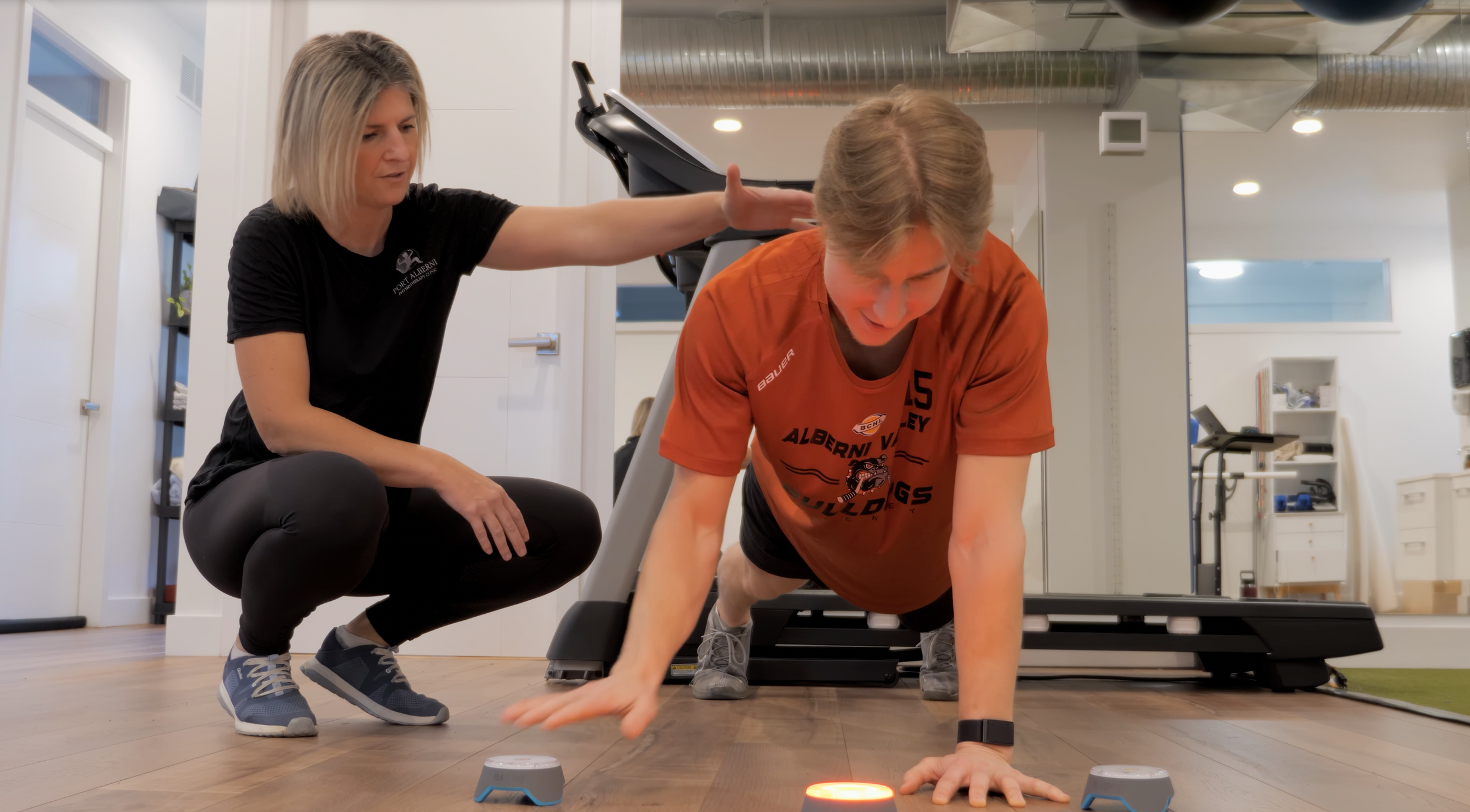
Getting back to sport after an injury is rarely as simple as waiting for the pain to go away and jumping back into practice.
Whether it’s a sprained ankle, a stress fracture, a cartilage injury or a major surgery, returning to sport is a process. The goal isn’t just to feel better — it’s to rebuild the strength, movement, confidence and sport-specific skills needed to safely handle the demands of your sport again.
While every injury is different, there is a general progression that most return-to-sport plans follow.
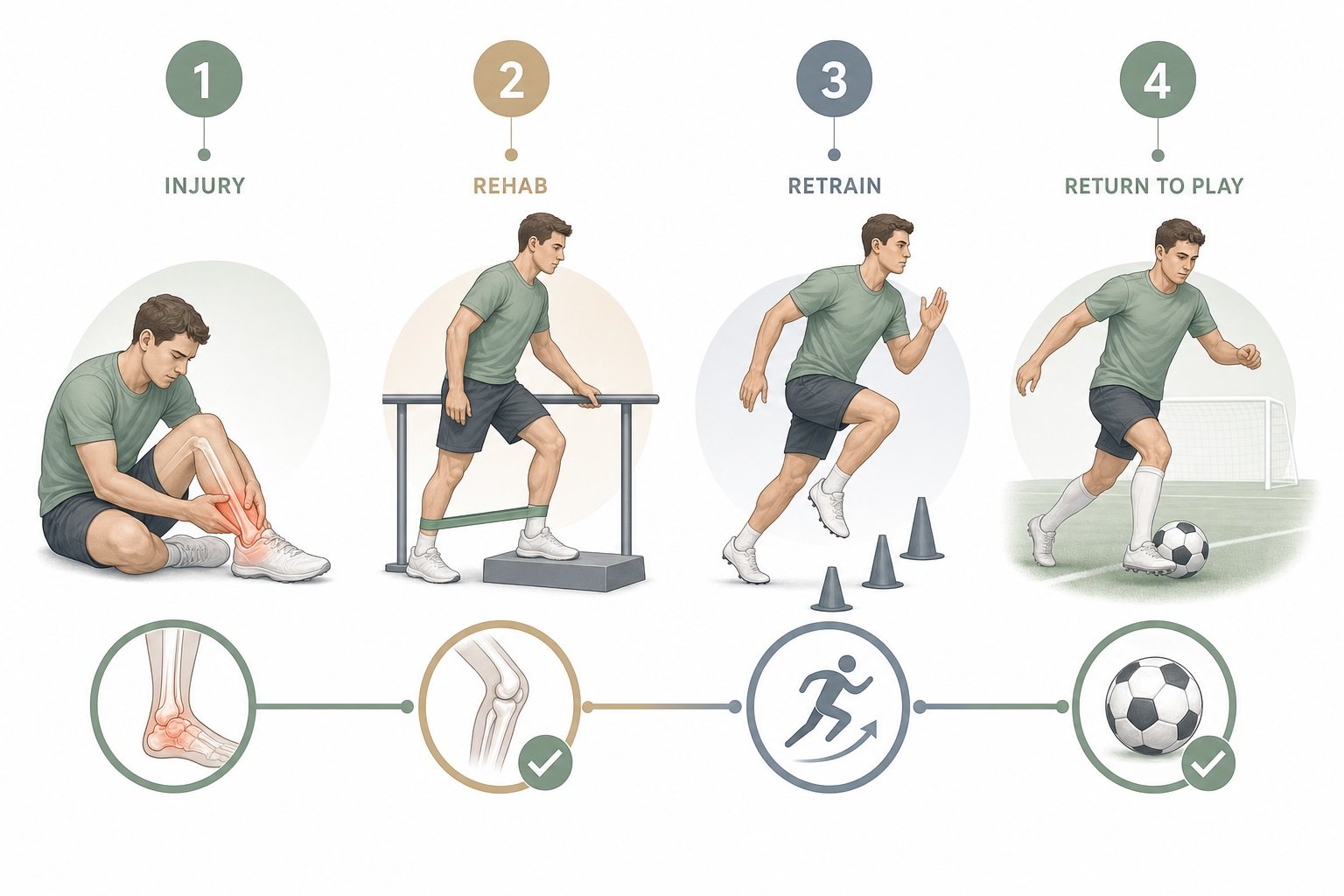
The General Rehabilitation Process
A return-to-sport program will look different depending on the injury, the athlete and the sport, but rehabilitation generally progresses through a few key phases:
1. Protect and recover
Early in an injury, the focus is on protecting the injured area and allowing the initial healing process to occur. This might mean modifying activity, using a brace, managing swelling and pain, maintaining movement where appropriate, and avoiding activities that could make the injury worse.
This phase doesn’t necessarily mean doing nothing. Depending on the injury, there may be ways to maintain cardiovascular fitness, strength in other areas and general movement while the injured tissue heals.
2. Restore movement and basic function
As symptoms settle, the focus shifts toward restoring range of motion, mobility and basic movement. The goal is to get the injured area moving normally again and to gradually reintroduce everyday activities.
For example, someone recovering from an ankle sprain may work on ankle mobility, balance and walking mechanics before progressing to more demanding exercises.
3. Rebuild strength and capacity
Once movement and symptoms have improved, strengthening becomes a bigger part of the program.
This is where we start asking the injured area to tolerate progressively more load. Strength, endurance, control and power are gradually rebuilt based on what the athlete needs.
The key word here is progressive. The goal isn't to go from injured to doing everything at once. We gradually increase the amount and intensity of work the body can handle.
4. Introduce sport-specific movements
Being strong in the gym doesn't automatically mean you're ready for your sport.
The next phase starts to look much more like the athlete's actual activities. This might include running, jumping, cutting, changing direction, throwing, kicking, skating or other sport-specific movements.
The intensity and complexity of these activities are gradually increased.
5. Return to practice
Before returning to full competition, athletes will often return to modified practice first. This gives them an opportunity to see how their body responds to the demands of their sport in a more realistic environment.
Practice can be progressed from individual drills, to non-contact or modified participation, to full practice depending on the injury and sport.
6. Return to competition
The final step is returning to games or competition. Even once an athlete is cleared to play, rehabilitation doesn't necessarily stop.
Strength, conditioning and injury-prevention work often continues as the athlete gets back to their normal training and competition schedule.
How Long Does it Take?
There isn't one timeline that applies to every injury. Healing time depends on the tissue involved, the severity of the injury, the treatment required and the demands of the athlete's sport.
As a very general guide:
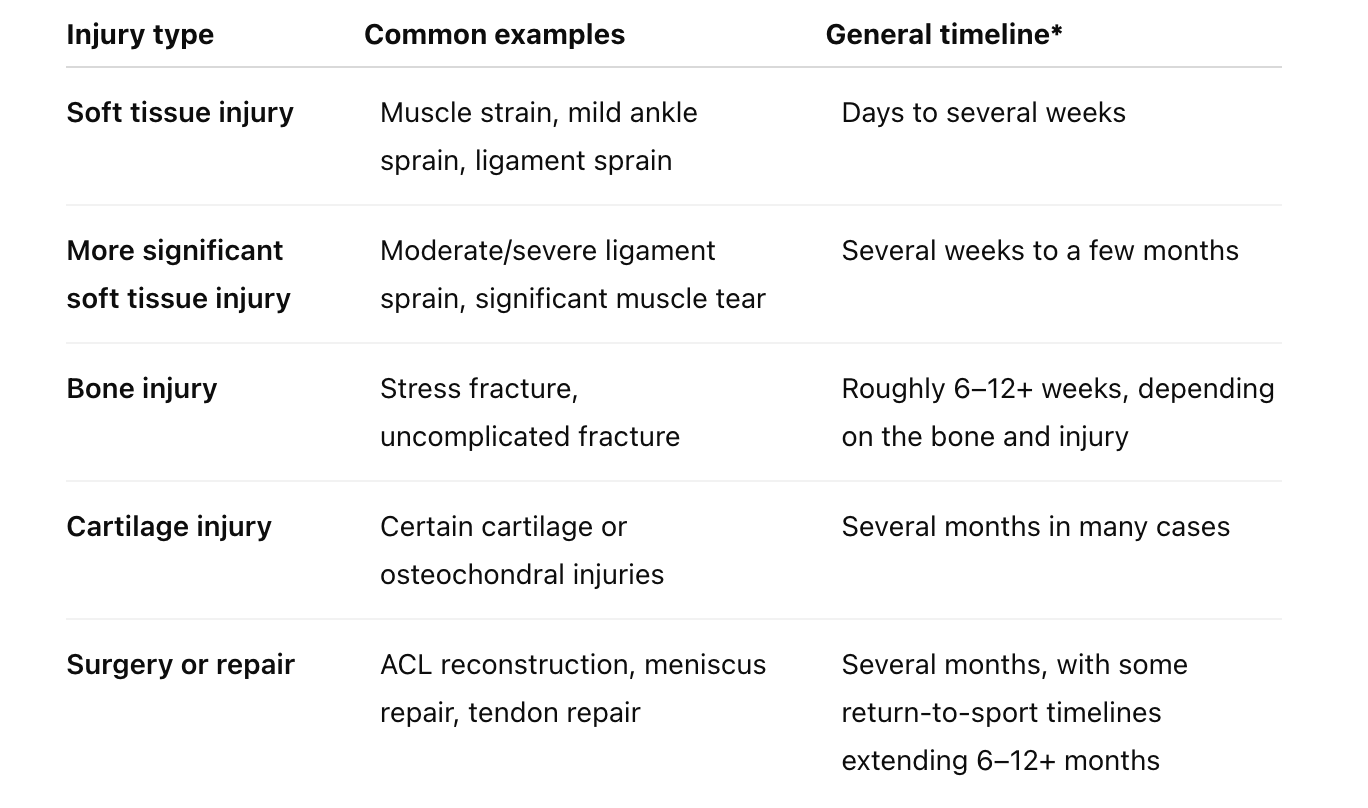
*These are broad examples, not individual recovery timelines. Some injuries will be considerably faster or slower depending on the circumstances.
For example, an uncomplicated ankle sprain might allow someone to return to sport within a few weeks, while an ACL reconstruction typically involves a much longer rehabilitation process. A bone may be biologically healed before an athlete has regained the strength, power and sport-specific capacity needed to safely compete.
Healing and readiness are not always the same thing.
That's an important distinction when talking about return to sport. An athlete can be pain-free and still not be ready for the demands of their sport.
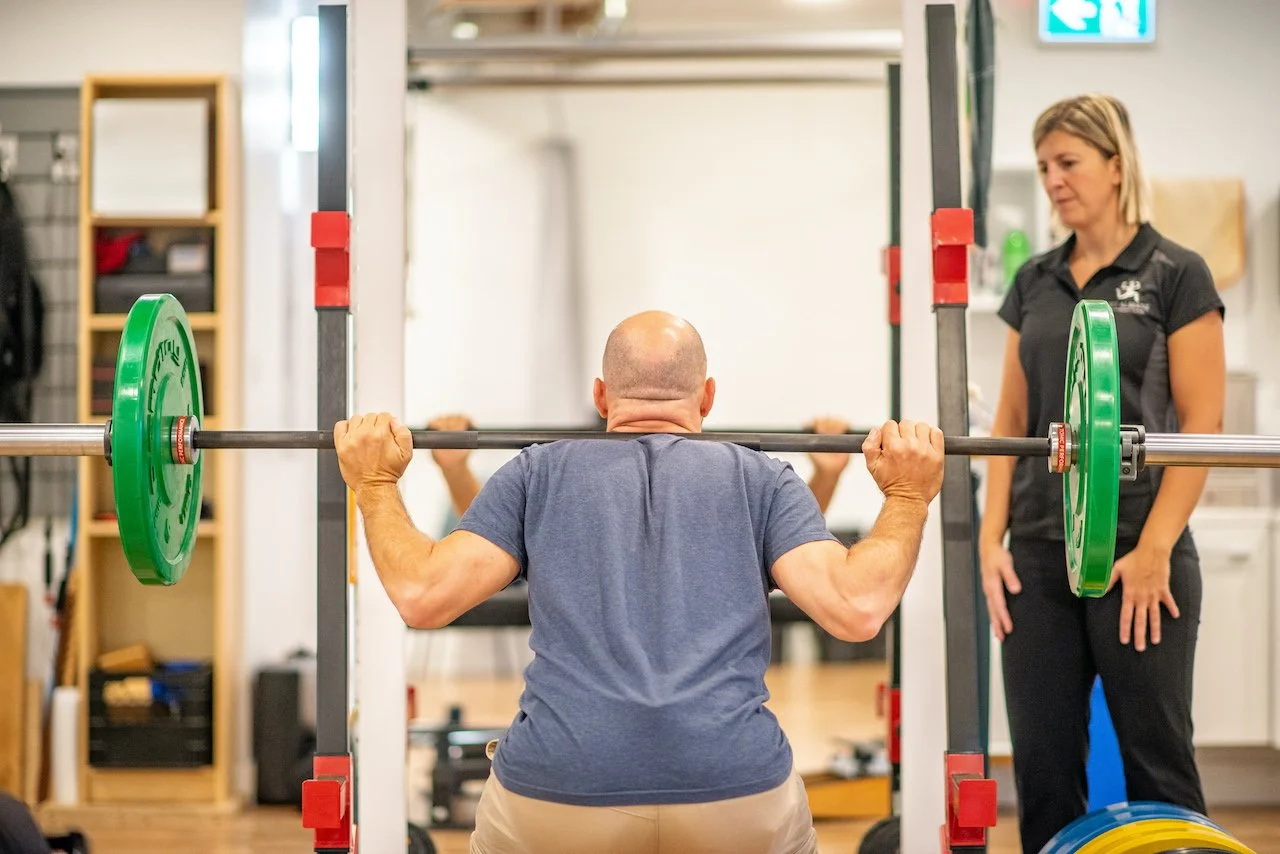
Where Does Physiotherapy Fit in?
Physiotherapy can help guide an athlete through the different stages of recovery and determine when they're ready to progress.
Early on, this might involve helping manage pain and swelling, restoring movement and developing an appropriate exercise program. As rehabilitation progresses, the focus shifts toward strength, power, balance, conditioning and sport-specific movements.
Physiotherapists can also use objective measures to help track progress. Depending on the injury, this could include strength testing, range-of-motion measurements, hop testing, running assessments or other sport-specific testing.
For younger athletes, the process can involve a little more coordination.
A physiotherapist may work with the athlete, parents, coaches, athletic therapists, strength and conditioning staff, teachers and medical professionals to make sure everyone understands what the athlete can and can't do.
For example, a teenage soccer player returning from an ankle injury may have specific restrictions around running, cutting and contact. Their physiotherapist can communicate these guidelines with the coaching staff and athletic therapist, while gradually increasing the athlete's workload as they improve.
At the other end of the spectrum, elite athletes may have an entire team involved in their recovery. Physiotherapists can coordinate with physicians, surgeons, athletic therapists, strength and conditioning coaches and coaching staff to help build a progression from rehabilitation back into full training and competition.
Return to Sport is More Than a Date on the Calendar
One of the biggest misconceptions about injury recovery is that there is a specific date when an athlete is suddenly "ready."
In reality, return to sport is usually based on how the athlete is progressing, not just how much time has passed.
The athlete needs to be able to tolerate the physical demands of their sport, demonstrate appropriate strength and movement, and feel confident performing the activities they need to perform.
A good return-to-sport plan should be gradual, specific to the athlete and flexible enough to change as their recovery progresses.
Whether you're a weekend warrior, a young athlete or competing at an elite level, the goal is the same: don't just get back to your sport — build your body back up so it's ready for the sport you're returning to.