
DOMS vs. Injury: How to Tell the Difference
Starting a new exercise routine is a great way to improve your strength, mobility and overall health. Whether you're returning to the gym after a break, trying a new fitness class or simply becoming more active, you may notice some muscle soreness as your body adjusts to new activities.
But how do you know if that post-workout soreness is a normal part of getting stronger or a sign that you may have injured yourself?
Delayed Onset Muscle Soreness (DOMS) is a common experience when introducing your body to unfamiliar movements or increasing the intensity of your workouts. While some muscle soreness is expected, it's important to recognize the difference between normal post-exercise discomfort and pain that may indicate an injury.
Here's what you need to know about DOMS, why it happens and when you should pay closer attention to your symptoms.
What Is Delayed Onset Muscle Soreness (DOMS)?
Delayed Onset Muscle Soreness, commonly referred to as DOMS, is the muscle soreness and stiffness that develops after physical activity, particularly when performing exercises your body isn't accustomed to.
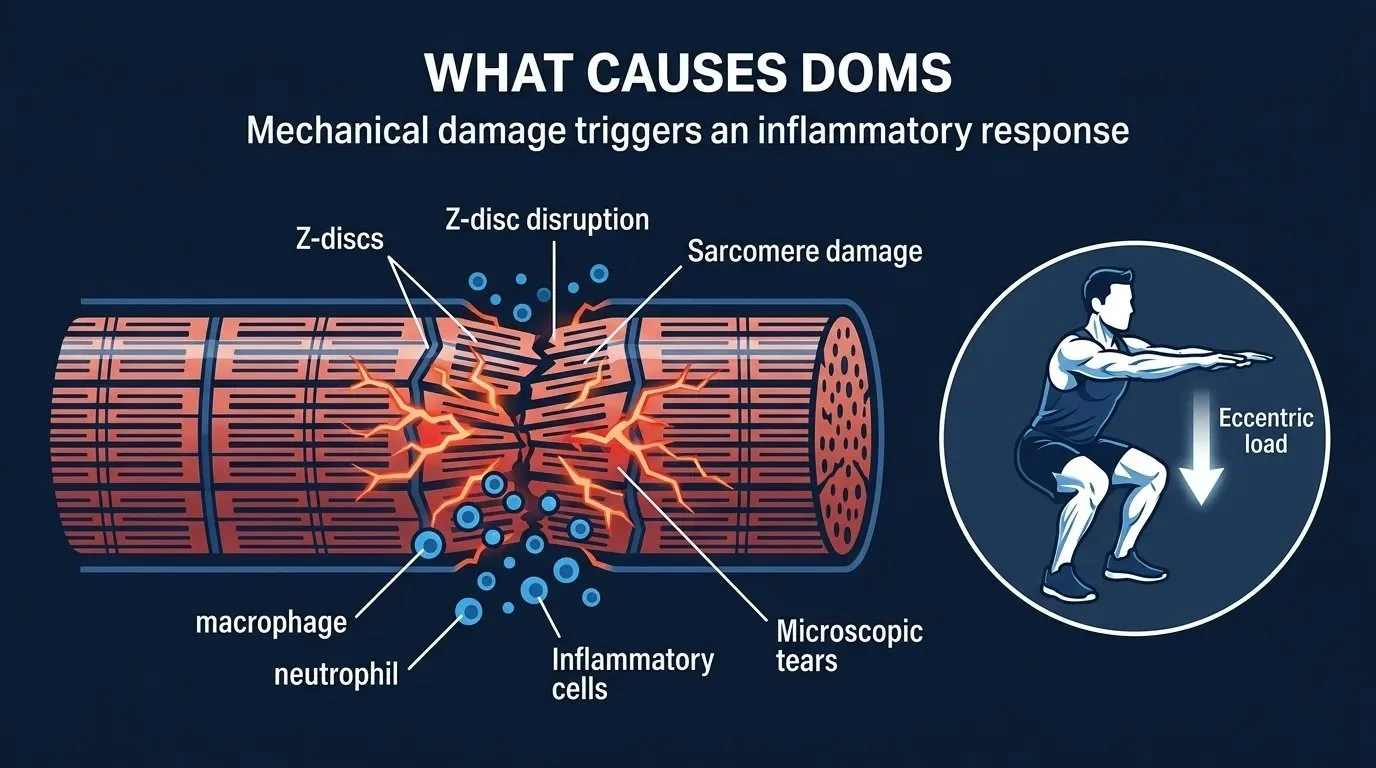
DOMS is associated with microscopic damage to muscle fibres that occurs when muscles are exposed to unfamiliar or increased physical demands. This triggers an inflammatory response as your body works to repair the affected tissue and adapt to the exercise.
During this process, various inflammatory substances contribute to the sensitivity and soreness you experience. As your muscles repair and adapt, they become better equipped to handle similar activities in the future.
DOMS is particularly common after exercises involving eccentric muscle contractions. This happens when a muscle lengthens while producing force, such as lowering into a squat, walking downhill or slowly lowering a weight during a bicep curl.
These types of movements place considerable stress on muscle fibres, which is one reason you may notice more soreness after certain exercises.
You may experience DOMS when:
Starting a new exercise program or returning to exercise after a break.
Increasing the intensity, duration or frequency of your workouts.
Trying unfamiliar exercises or movements.
Performing more repetitions or sets than you're used to.
Incorporating exercises that involve a lot of eccentric muscle contractions.
It's also worth noting that muscle soreness isn't necessary for making progress. You can build strength, improve endurance and see improvements in your fitness without feeling sore after every workout.
What Does DOMS Feel Like?
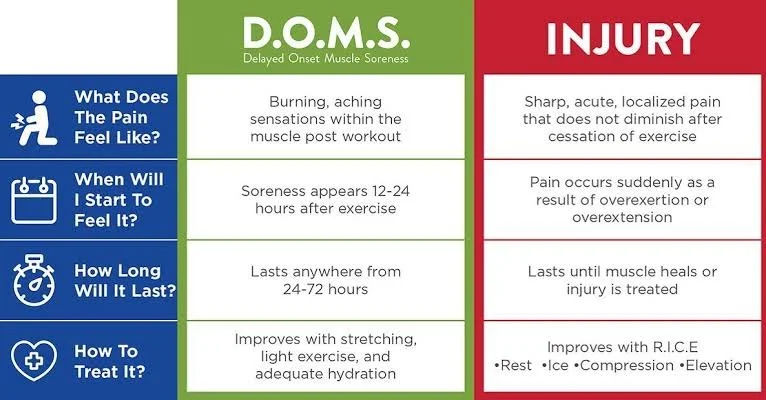
One of the defining characteristics of DOMS is that it doesn't usually appear immediately after exercise. Instead, symptoms typically develop 12–24 hours following a workout, often becoming most noticeable around 24–72 hours afterward.
Common symptoms include:
Muscle tenderness: The muscles you've worked may feel sore or sensitive to touch.
Stiffness: You may notice reduced flexibility or stiffness when getting out of bed, sitting down or climbing stairs.
Discomfort with movement: Activities that use the affected muscles may feel more uncomfortable than usual.
Temporary muscle weakness: The affected muscles may feel weaker or more fatigued than normal.
Localized muscle soreness: Discomfort is generally felt within the muscles that were exercised.
DOMS typically improves on its own over several days, with most symptoms resolving within 3–5 days. The discomfort should gradually decrease rather than become progressively worse.
DOMS vs. an Injury: How Can You Tell the Difference?
While DOMS is a normal response to unfamiliar exercise, pain associated with an injury can sometimes feel similar. There are a few differences that can help you determine when something may be more than typical post-workout soreness.
1. When the Pain Starts
DOMS typically develops gradually, several hours after exercise, and is often most noticeable the following day.
An injury, on the other hand, may cause immediate pain during a particular movement or exercise. You might notice a sudden sharp pain, pulling sensation or feeling that something isn't quite right while performing an activity.
2. The Type of Pain
DOMS generally feels like a dull ache, tenderness or stiffness within the muscles. It may be uncomfortable to move, but the discomfort usually improves as you gently get moving.
Injury-related pain may feel sharper, more localized or persistent. You might also experience pain that is specifically triggered by certain movements or positions.
3. Where the Pain Is Located
DOMS typically affects the muscles that were worked during exercise. For example, after a lower-body workout, you may experience soreness through your quadriceps, glutes or hamstrings.
Pain that is concentrated around a joint, tendon or specific area rather than the muscle itself may warrant further assessment, particularly if it's accompanied by swelling, instability or restricted movement.
4. How Long Symptoms Last
DOMS generally peaks within the first 1–3 days and gradually improves over the following few days.
Pain that continues to worsen, doesn't begin to improve after several days or repeatedly returns with activity may indicate an underlying issue that needs attention.
5. Other Symptoms
DOMS usually occurs without significant swelling, bruising or changes in joint function.
An injury may involve additional symptoms such as noticeable swelling, bruising, reduced range of motion, joint instability or difficulty bearing weight.
It's important to remember that these differences aren't definitive. Some injuries develop gradually, and not every injury causes immediate or severe pain. When in doubt, it's better to have your symptoms assessed rather than assume they're simply part of your workout.
How to Manage DOMS and Support Recovery
If you're experiencing typical DOMS, you generally don't need to stop all physical activity. In fact, gentle movement can help reduce stiffness and make everyday activities more comfortable.
A few ways to support recovery include:
Keep moving: Gentle walking, cycling or light mobility exercises can help you stay active without placing excessive demands on sore muscles.
Prioritize sleep: Adequate sleep supports the body's recovery and muscle repair processes.
Stay hydrated: Drinking enough water helps support normal muscle function and overall recovery.
Eat a balanced diet: Include adequate protein to support muscle repair, along with carbohydrates and other nutrients to help meet your energy needs.
Allow time for recovery: Avoid repeatedly training the same muscle groups at high intensity when they're particularly sore. Give your body time to adapt before increasing the demands of your workouts.
You can usually continue exercising with DOMS, provided your symptoms are manageable and your movement isn't significantly affected. Consider reducing the intensity or choosing a different activity while your muscles recover.
If you experience sharp or worsening pain, significant swelling, or difficulty moving or bearing weight, stop the activity and seek medical assessment. Severe muscle pain or swelling accompanied by unusual weakness or dark, tea-coloured urine requires urgent medical attention, as these can be signs of a serious condition called rhabdomyolysis.
How to Reduce Your Risk of Excessive Soreness and Injury
When starting a new exercise routine, it's tempting to jump right in and do as much as possible. However, one of the best ways to avoid excessive soreness and reduce your risk of injury is to give your body time to adapt.
A few things to keep in mind:
Start gradually: Begin with manageable weights, repetitions and workout durations. You can gradually increase the demands as your strength and fitness improve.
Prioritize proper technique: Focus on controlled movements and good exercise technique rather than lifting heavier weights or completing more repetitions.
Warm up before exercising: Spend 5–10 minutes preparing your body with light aerobic activity and dynamic movements related to your workout.
Build in recovery time: Allow adequate time between more challenging workouts, ideally 48-72 hours, especially when targeting the same muscle groups.
Listen to your body: Some muscle fatigue and soreness are normal, but pain that changes how you move or gets progressively worse shouldn't be ignored.
Remember, consistency is more important than intensity when establishing a new exercise routine. You don't need to push yourself to exhaustion to see results.
When Should You See a Physiotherapist?
If you're unsure whether your symptoms are normal muscle soreness or something more, a physiotherapist can help assess your symptoms, identify potential injuries and determine the best course of action.
You may benefit from an assessment if you experience:
Pain that is sharp, persistent or getting progressively worse.
Swelling, bruising or noticeable changes in joint movement.
Pain that continues beyond the typical recovery period.
Repeated discomfort when performing the same exercises or activities.
Difficulty returning to your normal activities or exercise routine.
Physiotherapy can also help you develop an exercise program that considers your current fitness level, movement abilities and goals, allowing you to build strength and confidence while progressing at an appropriate pace.
The Bottom Line
Some muscle soreness is normal when starting a new exercise routine, especially when introducing unfamiliar movements or increasing the demands on your body. DOMS is a common part of the muscle adaptation process and typically resolves on its own within a few days.
However, it's important to recognize when pain may be signalling something more. Paying attention to the timing, location and type of discomfort, along with any additional symptoms, can help you make better decisions about your recovery.
Take your time, build gradually and remember that a sustainable exercise routine is one that allows you to keep moving consistently without pushing through pain.