
Viewing entries tagged
strength and conditioning

How Much Strength Training Do You Actually Need?

How Much Strength Training Do You Actually Need?

When it comes to strength training, it can be easy to think that you need to spend hours in the gym to see results. Maybe you feel like you need a full workout program, lots of equipment, and several days a week to make it worthwhile.

The reality is much simpler.

When it comes to strength training, consistency is more important than volume.

You don't need to train five days a week to get stronger. In fact, for someone who is busy, starting with a realistic amount of strength training that you can maintain over time is often a much better approach.


So, How Often Should You Strength Train?

For general health and fitness, a good goal is to include strength training at least two days per week, working the major muscle groups.

But that doesn't mean that one session a week isn't worthwhile.

If you're currently doing no strength training, adding one session a week is still a positive step. You can build strength, become more comfortable with the movements, and start creating a routine.

Think about it this way: strength training once a week for six months is going to be far more beneficial than training five times a week for one month and then stopping.

The more frequently you train, the quicker you may notice changes in your strength and fitness. However, those short-term gains don't mean much if the routine isn't something you can maintain.

The goal is to find a level of training that fits into your life and that you can continue doing week after week.

Consistency Is Key

It's easy to get caught up in how much exercise we should be doing. We might decide we're going to completely overhaul our routine, start training five days a week, and make big changes all at once.

Sometimes that works for a few weeks.

But then life gets busy, motivation drops, or your schedule changes, and suddenly you're not exercising at all.

This is why I often think it's more useful to focus on what you can consistently do, rather than what you could theoretically fit into your schedule.

If one strength workout per week is realistic for you right now, start there.

If you can manage two, great.

If you have the time and enjoy strength training three or four times a week, that can work too.

The important part is that you're able to keep doing it.


How Much Time Do You Need?

There isn't a magic amount of time that a strength workout needs to take.

A 60-minute workout can be great, but a focused 20–30 minute session can also be effective.

If you're short on time, focus on a few key movements that work the major muscle groups rather than trying to fit everything into one workout.

For example, a simple full-body session could include:

  • A squat or lunge

  • A hip hinge

  • A pushing exercise

  • A pulling exercise

  • A core exercise

You can adjust the exercises, resistance and number of sets depending on your experience and goals.

The goal isn't to make every workout as long or difficult as possible. It's to provide your body with enough of a challenge to encourage it to adapt, while still allowing you to recover.

What If You Only Have 20 Minutes?

This is where it helps to change the way you think about exercise.

Instead of thinking, "I don't have enough time to work out today," ask yourself, "What can I get done in the time I have?"

Twenty minutes of strength training is still twenty minutes of training.

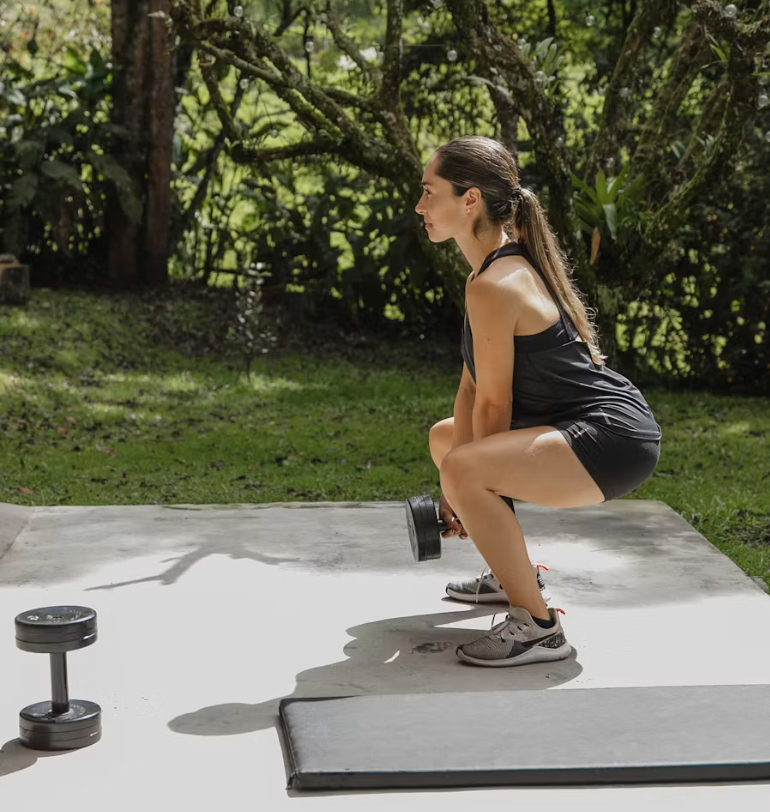
You could choose three or four exercises and complete a few sets of each. You could do a quick workout at home, use resistance bands, dumbbells, or even your body weight.

You can also break your exercise up throughout the day. Ten minutes in the morning and another 10 minutes later in the day can still help you build movement into your routine.

It doesn't have to be perfect to be worthwhile.


How Do You Fit Strength Training Into Your Existing Routine?

One of the easiest ways to make strength training more consistent is to work it into something you're already doing.

If you already go for a walk a few times a week, add 15–20 minutes of strength exercises before or after your walk.

If you have a couple of evenings that are usually less busy, schedule your workout at that time.

If getting to the gym is the biggest barrier, keep a few pieces of equipment at home.

You could also start with exercises that require no equipment at all.

The best exercise routine is often the one that fits naturally into your life.


Does More Training Mean Better Results?

Generally, the more often you train, the more opportunities you have to challenge your body and progress. If your goal is to build strength or improve athletic performance, increasing your training frequency may help you see results sooner.

But there is a balance.

Your body needs time to recover, and more isn't always better. If you're also running, playing sports, hiking, cycling or participating in other activities, your overall workload matters too.

Increasing your training from one session a week to two or three may help you progress faster, but only if you can recover from it and maintain that routine.

It's also important to remember that progress isn't always immediate. Strength, fitness and physical capacity are built over time.


Think Long-Term

Instead of asking yourself, "What's the most I can do right now?" try asking, "What can I realistically keep doing for the next six months?"

That change in mindset can make a big difference.

Training five times a week for one month might feel like a huge accomplishment, but if you stop afterwards, you've lost the consistency that creates long-term change.

Training once or twice a week for six months may not feel as impressive, but you've given your body months of repeated exposure to strength training.


The Bottom Line

You don't need to spend hours in the gym or train every day to benefit from strength training.

If you can manage two sessions a week, that's a great goal. If you're just getting started and one session a week is what fits your schedule, that's still a great place to begin.

Start with something realistic. Build the habit. Then, if you have the time and want to progress, gradually increase the frequency or challenge.

Consistency will always beat doing too much, too soon.

The best strength training program isn't necessarily the one with the most workouts. It's the one you can stick with.


Why Strength and Conditioning is the Key to Returning Stronger After Injury

Why Strength and Conditioning is the Key to Returning Stronger After Injury

Recovering from an injury is rarely a straight path. The first steps often involve rest, hands-on treatment, and targeted physiotherapy to reduce pain, restore mobility, and rebuild foundational strength. But what happens after you’ve completed your rehabilitation sessions? For many athletes and active individuals, the transition back to sport or higher-level activity requires more than just being pain-free—it requires rebuilding resilience, power, and confidence.

That’s where strength and conditioning sessions come in. This stage of recovery bridges the gap between rehabilitation and performance, ensuring you don’t just get back to activity, but return stronger, more confident, and less likely to re-injure.


1. Where Strength and Conditioning Fits in the Recovery Timeline

Physiotherapy is often the first stop after injury, focusing on pain management, restoring mobility, and re-establishing baseline strength. Once those building blocks are in place, many people wonder what’s next. Jumping directly back into sport or high-intensity training without additional preparation often leaves athletes at risk of setbacks.

Strength and conditioning fits into the late stages of rehabilitation—when you’re largely pain-free, moving well, and ready for more. It focuses on:

  • Bridging the gap between rehab and sport-specific demands.

  • Progressively loading tissues to build resilience in the injured area.

  • Developing higher-level movement skills like agility, coordination, and power.

Think of it as the “performance phase” of rehab: you’re no longer just recovering; you’re preparing to excel again.


2. Why a Tailored 60-Minute Session Matters

Generic training plans can only take you so far, especially after an injury. A 60-minute individualized strength and conditioning session gives you the opportunity to focus on:

  • Your specific injury history. Whether you’re coming back from an ACL tear, shoulder instability, or chronic ankle sprains, the program can target the movements and muscle groups most critical for your recovery.

  • Technique correction. Small adjustments in how you squat, jump, or land can dramatically reduce stress on vulnerable joints and tissues. Guided feedback during your session ensures you move efficiently and safely.

  • Pushing harder, safely. Many people are hesitant to load an injured area again, which can stall progress. A structured session provides reassurance and guidance so you can progressively challenge yourself with the right balance of intensity and recovery.

This individualized approach allows you to recover faster, train harder, and return to your sport or activity with greater confidence.


3. How Strength and Conditioning Complements Physiotherapy

Physiotherapy and strength and conditioning are different but complementary. Physiotherapy is clinical in nature. It focuses on diagnosis, reducing pain, restoring mobility, and addressing impairments. The aim is to get you back to a functional baseline.

Strength and conditioning is performance-driven. It builds strength, speed, power, and endurance while correcting movement inefficiencies. The aim is to help you return to your sport or activity at your best.

Together, they form a complete recovery journey. Physiotherapy gets you back to moving well; strength and conditioning makes sure you can move well under pressure, at speed, and in sport-specific contexts.


4. Confidence: The Missing Piece in Many Recoveries

One of the biggest barriers athletes face after an injury isn’t physical—it’s psychological. Fear of re-injury can hold people back from moving naturally, cutting, sprinting, or lifting the way they did before. This hesitation often leads to compensations that can increase the risk of new injuries.

Strength and conditioning helps rebuild this confidence by exposing you to controlled, progressive challenges. You relearn how to move powerfully and safely, gaining trust in your body again. By the time you step back onto the field, court, or gym floor, you know you’re ready.


5. Injury Prevention: Preparing for the Future

Participating in structured strength and conditioning after injury isn’t just about getting back to your previous level—it’s also about staying there. Targeted training improves:

  • Joint stability through strengthening supporting muscles.

  • Balance and coordination, reducing the likelihood of falls or awkward movements.

  • Movement efficiency, ensuring your body absorbs and transfers force effectively.

These improvements not only reduce the risk of reinjury but also enhance overall performance.


6. Who Benefits From Post-Injury Strength and Conditioning?

This approach isn’t just for elite athletes. Anyone who wants to return to activity after an injury can benefit. Common examples include:

  • Athletes preparing for their return-to-play protocols.

  • Active adults wanting to get back to running, skiing, or weightlifting.

  • Older adults looking to rebuild strength and reduce their risk of future injury.

  • Youth athletes who need guidance in safe technique and long-term development.

If your goal is to move better, get stronger, and prevent reinjury, strength and conditioning can help.


Takeaway: Don’t Stop at “Pain-Free”

Being pain-free is a milestone, not the finish line. The real measure of recovery is whether you can return to the activities you love at full capacity—and stay there. Strength and conditioning is the missing link for many people, turning a good recovery into a great one.

With individualized programming, expert guidance, and a focus on both performance and prevention, you can shorten your recovery timeline and build resilience for the future.

Ready to take the next step? Book a strength and conditioning session with Athletic Therapist Abbey Peters by calling 250-723-5112, and set yourself up for a stronger, safer return to the activities you love.