
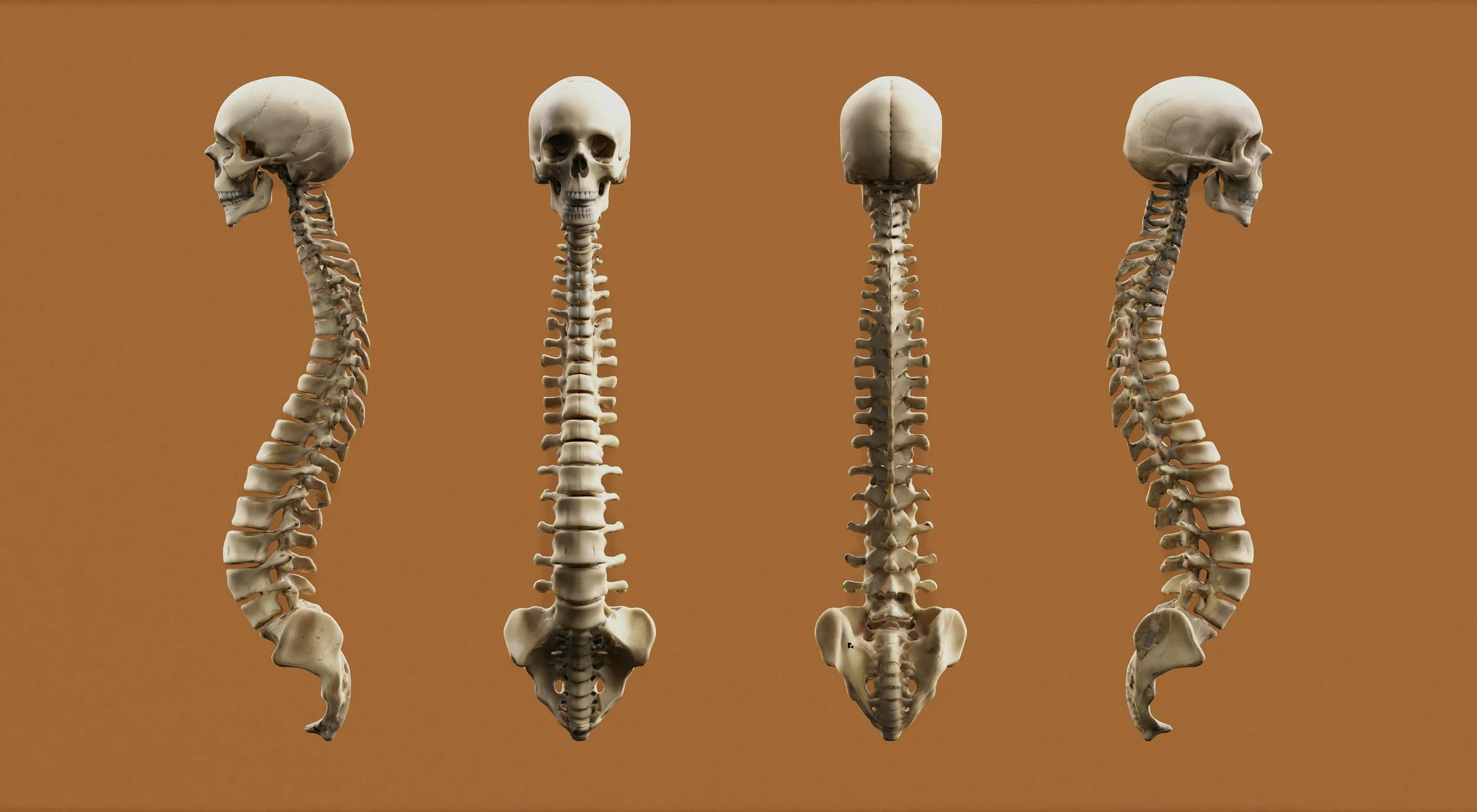
Understanding what really happens when your back “goes out.”
For decades, people have been told that their spine can “go out of place,” and that a practitioner can “put it back in” with a manipulation or adjustment. It sounds logical — if something feels stuck or painful, it must have shifted, right?
In reality, our spines are far more stable and resilient than that. The idea of bones “popping out” and needing to be “realigned” doesn’t reflect what’s actually happening inside the body. But that doesn’t mean spinal manipulation isn’t helpful — it can be a safe and effective way to relieve pain and improve movement. The key is understanding how it works.
Where the Misalignment Idea Comes From
It’s common for people to imagine their spine like a stack of blocks — if one slips out, you just need to “put it back.” The crack or pop that follows a manipulation can feel like proof that something’s been corrected.
In truth, that sound is simply gas releasing from the joint as pressure changes — similar to cracking your knuckles. The feeling of relief that follows is real, but it’s not because a bone was moved back into place. It’s because manipulation affects how your nervous system senses and responds to movement and pain.
This misunderstanding has lingered partly because it’s such an easy image to picture and explain. “Your pelvis was out” feels straightforward. But it’s an oversimplification that doesn’t match the body’s anatomy or how pain actually works.
What’s Really Happening in the Body
Manipulation influences the nervous system, not the skeleton. When a joint is moved quickly through a small range, the stretch of the joint capsule changes how sensory receptors fire. This alters how the brain interprets pain and movement — often making things feel looser, lighter, or more mobile afterward.
Your spine itself is incredibly strong. Each vertebra is held in place by ligaments, discs, and deep muscles. If a bone truly “went out,” it would cause severe pain or nerve injury requiring emergency care — not a simple adjustment.
When pain does occur, it’s often due to muscle tension, joint irritation, or a protective response from the nervous system. Muscles may tighten to guard an area, giving the sensation that something is “out,” even though everything is still aligned. Manipulation can help ease this response and restore normal movement — but it isn’t “putting anything back in.”
Why the “Out of Alignment” Story Persists
So why does the misalignment story stick around?
It’s partly tradition, and partly communication. The idea of a spine being “out” is easy to explain and easy to believe. It offers a quick, tidy cause-and-effect: something moved out, and we put it back.
The reality, however, is that pain and stiffness are multifactorial — they involve not just muscles and joints, but stress, sleep, emotions, and how your brain perceives threat or safety. That can be harder to explain, but it’s far more empowering.
Some practitioners continue to use the “realignment” language because it’s familiar, but modern research supports a more accurate understanding: spinal manipulation works by modulating the nervous system and reducing pain sensitivity, not shifting bones.
Understanding the “Crack” and Other Common Questions
That satisfying “pop” during an adjustment — called cavitation — is a harmless pressure change in the joint fluid. It has nothing to do with bones moving or “realigning.” Sometimes it happens, sometimes it doesn’t, and it doesn’t affect whether the treatment was effective.
People often ask, “But what about spondylolisthesis or Ehlers-Danlos Syndrome?”
Yes — certain medical conditions can cause true structural instability. But these cases are rare. For the average person with back or neck pain, the issue is almost always functional, not structural. The spine hasn’t shifted out; it’s simply become sensitive, stiff, or protective — and those are problems that respond well to movement and reassurance.
Moving Away from Fear-Based Explanations
Unfortunately, the “something’s out” story can sometimes create unnecessary fear. When people are told their spine is fragile or that it can “go out” with everyday activity, they may become anxious about movement or overly dependent on being “put back.”
Pain is not always a sign of damage — it’s often your nervous system’s way of asking for attention or rest. When patients understand this, they regain confidence in their body’s ability to move and heal.
Practitioners who teach patients that the body is strong, adaptable, and self-healing empower them to recover faster — and with less fear.
What Manipulation Really Does (and Why It Still Matters)
When performed safely by a trained physiotherapist or chiropractor, spinal manipulation can:
Reduce pain and muscle tension
Improve temporary mobility
Help restore confidence in movement
Support progress when combined with active exercise and education
Manipulation works by changing how the nervous system processes pain and movement, not by shifting bones. It’s a tool — one that can be effective when used alongside movement retraining, strengthening, and patient education.
The Takeaway: Your Spine Is Strong, Not Fragile
Your spine doesn’t “go out,” but it can become sore, stiff, or sensitive — just like any other part of the body. Spinal manipulation can help by calming the nervous system and restoring comfortable movement, not by “realigning” your bones.
At Port Alberni Physiotherapy and Wellness, our physiotherapists use evidence-based manual therapy techniques — including spinal manipulation when appropriate — to help reduce pain, improve movement, and support long-term recovery. We take the time to explain what’s really happening in your body so you can move with confidence, understand your pain, and trust in your body’s natural resilience.
